Old Fourth Ward
Civil rights history, Ponce City Market, and a Walk Score of 82
The Neighborhood in 30 Seconds
O4W is the neighborhood that changed how Atlanta thinks about itself. Martin Luther King Jr. was born here on Auburn Avenue. For decades after, the area declined. Then Historic Fourth Ward Park opened in 2011, Ponce City Market followed in 2014, and the Atlanta Beltline Eastside Trail connected it all together. Now it’s one of the most walkable, most active neighborhoods in the city.
Walk down the Eastside Trail on a Saturday afternoon and you’ll pass runners, strollers, dogs, street musicians, and a hundred people who clearly aren’t in a hurry. That’s O4W.
From Auburn Avenue to the Eastside Trail
Old Fourth Ward’s history is Atlanta’s history. Auburn Avenue (“Sweet Auburn”) was the center of Black commerce and culture in the early 1900s, home to Black-owned banks, insurance companies, churches, and newspapers. Martin Luther King Jr. was born at 501 Auburn Avenue in 1929, and Ebenezer Baptist Church, where he and his father preached, still stands as part of the Martin Luther King Jr. National Historic Site.
After desegregation, Auburn Avenue’s commercial district declined. White flight, urban renewal projects, and the construction of the Downtown Connector (I-75/85) fragmented the neighborhood. By the 1980s and 1990s, O4W was rough: vacant buildings, high crime, and a population that had dropped dramatically from its peak.
The turnaround came in stages. First, artists and young professionals moved in during the 2000s, drawn by cheap rent and proximity to downtown. Then the city invested in infrastructure. Historic Fourth Ward Park (2011) turned a flood-prone detention basin into a 17-acre park with a lake, trails, and a splash pad. Ponce City Market (2014) converted the massive old Sears, Roebuck & Co. building into a food hall, retail destination, and residential complex. The Atlanta Beltline Eastside Trail tied it all together.
Now O4W is one of the most recognizable neighborhoods in the Southeast. The transformation is essentially complete on the western side near the park and Ponce City Market. Further east, toward Edgewood and the Boulevard corridor, you still see the older O4W, with more grit, more edge, and more affordable options.
What You’re Actually Buying
O4W is fundamentally a condo and loft market. If you’re looking for a house with a yard, you’re in the wrong neighborhood (try Reynoldstown or Grant Park). Here’s what’s available:
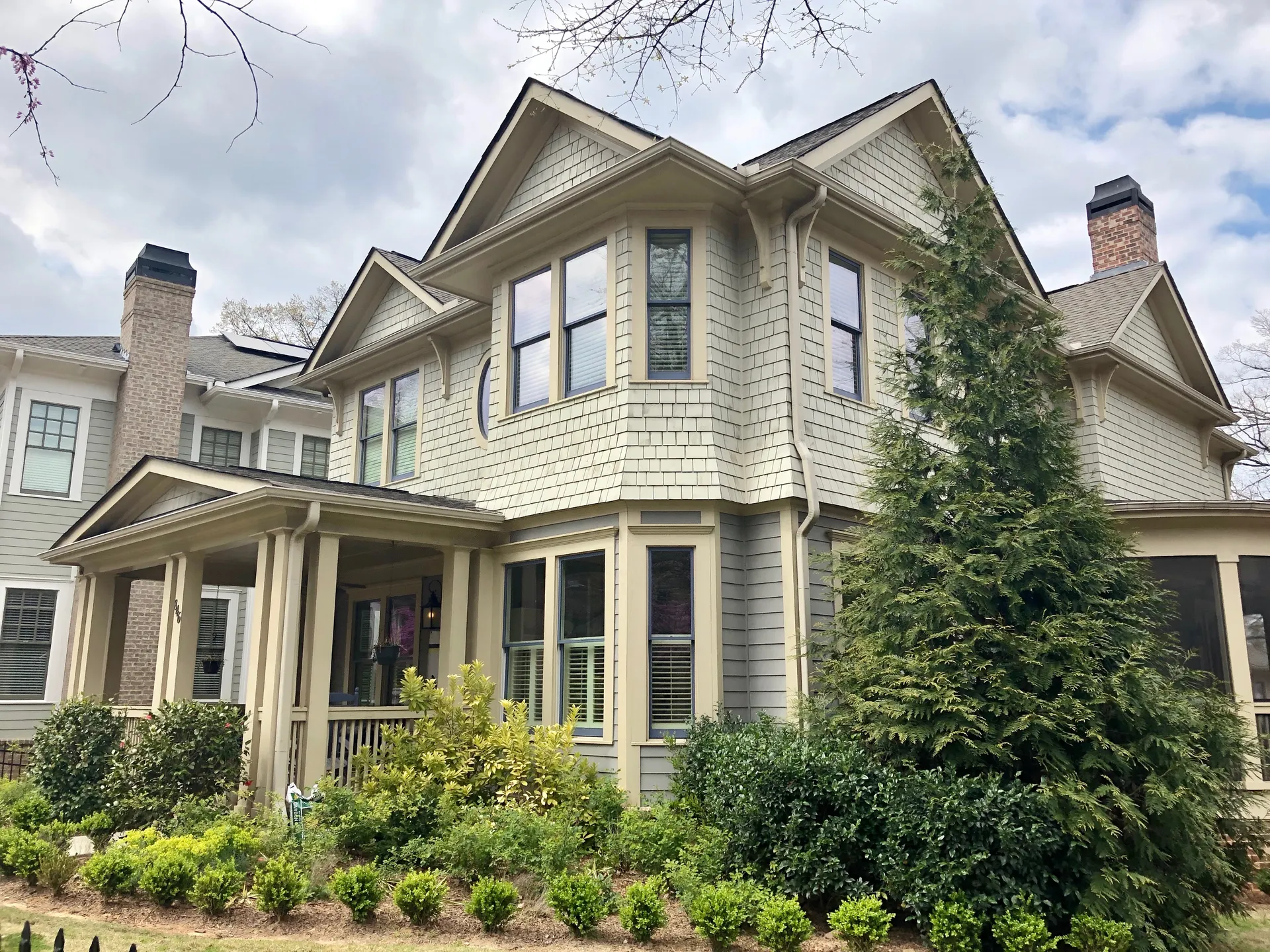
Loft conversions are the signature O4W housing type. Former warehouses, factories, and commercial buildings have been converted into residential units with high ceilings, exposed brick, concrete floors, and oversized windows. Buildings like the Stacks Lofts, the Telephone Factory, Bass Lofts, and the Ford Factory Lofts are the well-known ones. Unit sizes range from 600-square-foot studios to 2,000-square-foot two- and three-bedrooms. The character is real. These feel nothing like a suburban apartment complex.
New construction condos and mid-rises fill in the rest of the market. These are modern buildings with amenities: rooftop pools, fitness centers, concierge services, parking decks. Finishes tend toward the contemporary (quartz, stainless, LVP flooring). They lack the character of the loft conversions but offer better layouts and newer systems.
Townhomes exist but are limited, mostly small pockets of 4-8 unit developments on side streets. These are the middle ground between condo living and a real house. Expect 1,400-1,800 square feet, 3 beds/2.5-3.5 baths, rooftop decks, and attached garages.
Single-family homes are rare. When one comes on the market (usually a renovated bungalow or a new infill build) it moves fast and commands a premium. You’ll pay $800K-$1.2M for something that would cost $500K-$700K in Reynoldstown. You’re paying for the Walk Score and the address.
Price Tiers: From Starter Condo to Premium Loft
$200K-$350K: One-bedroom condos and smaller lofts. This is the O4W entry point, and it’s real. You can own in one of Atlanta’s most walkable neighborhoods for under $350K. The units are small (550-850 square feet), often in older buildings with higher HOA fees and fewer amenities. But you’re walking to Ponce City Market, the Eastside Trail, and Edgewood Ave. For a young professional or someone who travels a lot, this works.
$350K-$550K: Two-bedroom condos, nicer lofts with better views or more space, and the occasional one-bedroom in a premium building. This is the sweet spot for most O4W buyers. You get 900-1,300 square feet, a second bedroom (or a real home office), and likely a parking spot. Buildings with Eastside Trail views or Historic Fourth Ward Park frontage price higher in this range.
$550K-$800K: Large two-bedrooms and three-bedrooms in premium buildings, penthouse-level lofts, and the rare townhome. At this price, you’re getting 1,300-2,000 square feet with real finishes, not builder-grade. Atlanta Beltline Eastside Trail views, rooftop access, and high-end kitchen and bathroom finishes are standard.
$800K+: Single-family homes, large townhomes, and the best units in the best buildings. Top-floor Ponce City Market flats, renovated bungalows on quiet streets, and new construction townhomes with every upgrade. This tier is small, maybe a dozen sales per year in the whole neighborhood, and competitive.
HOA fees matter in O4W. Because the market is condo-heavy, monthly HOA fees are a real part of your budget. Expect $250-$500/month for a standard building, and $500-$800+ for buildings with full amenity packages. Factor this into your purchase math. A $350K condo with a $450/month HOA has a different monthly cost than a $400K condo with a $250/month HOA.
Schools: An Honest Assessment
O4W is zoned for Atlanta Public Schools. The elementary school is Hope-Hill Elementary, with Martin Luther King Jr. Middle School and Grady High School (recently renamed Midtown High School) for older students. Midtown High is one of the stronger APS high schools and draws families to the broader area.
The reality: most O4W residents buying condos aren’t buying with school zones in mind. This is a young professionals’ neighborhood first. Families with school-age children tend to look at the charter options (Atlanta Neighborhood Charter School, Drew Charter, Wesley International Academy) or private schools (Paideia, Friends School, The Children’s School are all nearby).
If you do have kids and want to live in O4W, it’s manageable. The charter and private school network in intown Atlanta is strong, and several families make it work. But you won’t find the same density of strollers here that you see in Grant Park or Virginia-Highland.
Getting Around Without a Car (It’s Actually Possible)
This is the real selling point. O4W’s Walk Score of 82 isn’t inflated. You can live here without a car, and many residents do.
On foot: Ponce City Market has a grocery store (Green Alderman), restaurants, and retail. There’s a Kroger on Ponce de Leon. Restaurants, bars, and coffee shops line North Avenue, Edgewood Avenue, and the streets around the park. You can walk to a doctor’s appointment, a hardware store, a gym, or a date night without thinking about parking.
Atlanta Beltline Eastside Trail: The trail runs directly through O4W, connecting you to Inman Park and Reynoldstown to the south and Piedmont Park and Midtown to the north. On a bike, Piedmont Park is 10 minutes. Krog Street Market is 10 minutes. You can commute to offices in Midtown on the trail in 20 minutes.
MARTA: The King Memorial station (Blue/Green Line) sits on the southern edge of O4W. The North Avenue station is on the western side. Between the two, you’ve got rail access to downtown (5 minutes), Midtown (10 minutes), Buckhead (20 minutes), and the airport (30 minutes). Bus routes along North Avenue, Boulevard, and Edgewood add coverage.
Bike Score of 85: That’s one of the highest in Atlanta. Between the Eastside Trail, relatively flat terrain, and the density of destinations within biking distance, O4W is where Atlanta’s bike culture actually functions as transportation rather than recreation.
By car: When you do drive, you’re 5 minutes from downtown, 10 from Midtown, and connected to I-75/85 via Boulevard or the Freedom Parkway. Decatur is 15 minutes east on Ponce de Leon.
What’s Still Changing
O4W is mature compared to southside neighborhoods, but development hasn’t stopped.
The Eastside Trail continues to evolve. New access points, improved crossings, and better lighting are ongoing projects. The trail’s connection south toward Reynoldstown and eventually the SE Beltline Southside Trail will complete more of the 22-mile loop and increase O4W’s connectivity.
Edgewood Avenue is in a constant state of flux. New bars and restaurants open, others close. The nightlife strip remains Atlanta’s go-to for dive bars and late-night spots, but the mix shifts every year. More food-focused concepts and daytime businesses are filling in, which gradually changes the avenue’s character from “nightlife only” to something more mixed.
North Avenue corridor development is adding density. New residential buildings and mixed-use projects are filling in surface parking lots and vacant parcels along North Avenue between Boulevard and the Downtown Connector. This adds population, which supports more retail and better transit.
Affordable housing pressure is an ongoing conversation. As O4W has gotten more expensive, advocacy groups and city officials have pushed for inclusionary zoning and affordable units in new developments. Some new buildings include affordable units; the debate over how many and at what income levels continues.
The Honest Tradeoffs
Parking is terrible. Street parking in the neighborhoods is limited and competitive. Most condo buildings include one spot; a second spot costs extra or doesn’t exist. If you have two cars and your building only includes one space, budget for a second spot ($100-$200/month) or accept that one car lives on the street. Weekend parking near the Eastside Trail and Ponce City Market is a particular headache.
It’s loud. Edgewood Avenue on a Friday and Saturday night is genuinely loud: live music, bar crowds, rideshare traffic. If your condo faces Edgewood, you’ll hear it. Even away from the bars, O4W has the ambient noise of an urban neighborhood: sirens, construction, traffic, the Eastside Trail crowds on weekends. If you want quiet, you’re in the wrong place.
HOA drama. Condo living means condo associations, and O4W buildings run the full spectrum from well-managed to dysfunctional. Before you buy, read the HOA minutes, check the reserve fund, and ask about upcoming special assessments. A cheap condo in a building with a $30K special assessment coming isn’t actually cheap.
Small living spaces. Unless you’re spending $600K+, you’re likely getting under 1,200 square feet. That’s fine for one or two people, but it gets tight with kids, pets, or a serious work-from-home setup. Storage is limited in most buildings.
The tourist factor. Ponce City Market and the Eastside Trail draw visitors from across the metro area and beyond. On weekends, the neighborhood’s public spaces feel like a destination rather than a residential area. Some residents love the energy; others get tired of the crowds on their doorstep.
Best Blocks and Buildings
Along Historic Fourth Ward Park: the streets and buildings fronting the park (Parkway Dr NE, North Avenue near the park entrance) offer green space views, relative quiet, and some of the most desirable addresses in the neighborhood. Condos with park views command a premium and hold value well.
The Eastside Trail corridor between Ponce City Market and Krog Street Tunnel. This stretch has the best walkability in the neighborhood. You’re equidistant from the park and the restaurants. Buildings along this corridor (including some of the converted lofts) are consistently in demand.
Rankin Street NE and surrounding blocks: a pocket of quieter residential streets east of Boulevard, with some of the remaining bungalows and smaller homes. This is where you find the non-condo housing in O4W. Tree canopy is better here, and the feel is more residential.
The blocks around Auburn Avenue near the King Historic Site: more historic character, slightly lower prices, and improving infrastructure. This area is less polished than the Ponce City Market side of O4W but has strong long-term value as Auburn Avenue revitalization continues.
Edgewood Avenue itself, only if you want to be in the middle of the action and you don’t mind the noise. The upside is walkability to everything. The downside is everything walks past your door, too.
O4W isn’t the neighborhood for everyone. But if you want to walk out your door and be in the middle of Atlanta (the food, the trail, the history, the energy) there’s no better address in the city. The question is whether that’s worth condo living and a parking headache. For a lot of people, the answer is yes.
Data sources: Walk Score, Redfin. Prices reflect 2025 market conditions.
Quick Facts
- Median Price
- $475,000
- Avg $/Sq Ft
- $380
- Walk Score
- 82
- Transit Score
- 64
- Bike Score
- 85
- ZIP Codes
- 30308, 30312
- Beltline
- Direct Access
Why Live in Old Fourth Ward
- Ponce City Market, Historic Fourth Ward Park, and the Atlanta Beltline Eastside Trail all in one neighborhood
- Martin Luther King Jr. was born here, and the National Historic Site is on Auburn Ave
- Walk Score of 82 with groceries, restaurants, and nightlife on foot
- Condos and lofts from $250K, townhomes and single-family from $700K+
- Edgewood Ave has some of Atlanta's best dive bars and late-night spots
Local Amenities
Landmarks & Attractions
- Ponce City Market
- Historic Fourth Ward Park
- Martin Luther King Jr. National Historic Site
- Krog Street Tunnel
Dining & Nightlife
- Ponce City Market food hall
- Sister Louisa's Church
- Edgewood Avenue bars
- Ladybird Grove & Mess Hall
Parks & Recreation
- Historic Fourth Ward Park
- Atlanta Beltline Eastside Trail
- Freedom Park Trail
Old Fourth Ward FAQs
Clients in Old Fourth Ward
★ 5 · 24 reviews on Google"Deep knowledge of the Atlanta market, especially Boulevard Heights, Chosewood Park, Ormewood Park, and Reynoldstown. Generated serious interest before the property even hit the market."— David Darko-Mensah
"Not a part-time Realtor. She hit the ground running, told me what I needed to do, and we had it under contract in 40 days."— Bill Powell
"The exact person we were looking for when it came to the neighborhood and the type of home we wanted. Helped us from beginning to end."— Fox Wade
Interested in Old Fourth Ward?
Get insider knowledge and exclusive listings from a local expert who knows every street.