Bobbie Spiller Real Estate

Inman Park

Victorian bones, SE Beltline access, 87 Walk Score

Atlanta’s First Planned Suburb, and Still One of Its Best

Joel Hurt developed Inman Park in 1889 as Atlanta’s first streetcar suburb, connected to downtown by electric trolley. He hired landscape architects to design curving streets, parks, and generous lots, then built grand Victorian and Queen Anne houses for the city’s business class. For a few decades, it was the most prestigious address in Atlanta.

Then the mid-20th century happened. Wealthier residents left for Buckhead and the northern suburbs. Houses were subdivided into apartments. A freeway proposal threatened to demolish a section of the neighborhood. By the 1960s, Inman Park was in serious decline. Beautiful architecture falling apart, affordable by default.

The turnaround started in the 1970s when a group of residents organized to fight the freeway, restore homes, and establish historic preservation protections. That effort succeeded. The freeway was never built. The houses were restored instead of demolished. And the Inman Park Neighborhood Association became one of the most active civic organizations in the city, a tradition that continues today. If someone proposes a zoning change or an out-of-scale development, they’ll hear about it at the next meeting.

What you see now is the result of five decades of careful stewardship: a walkable, architecturally rich neighborhood where 130-year-old Victorians share streets with mature oaks, independent businesses, and one of the most used sections of the Atlanta Beltline Eastside Trail.

Victorian Mansions, Craftsman Cottages, and Modern Infill

The housing stock in Inman Park spans three broad categories, and the price range is wide.

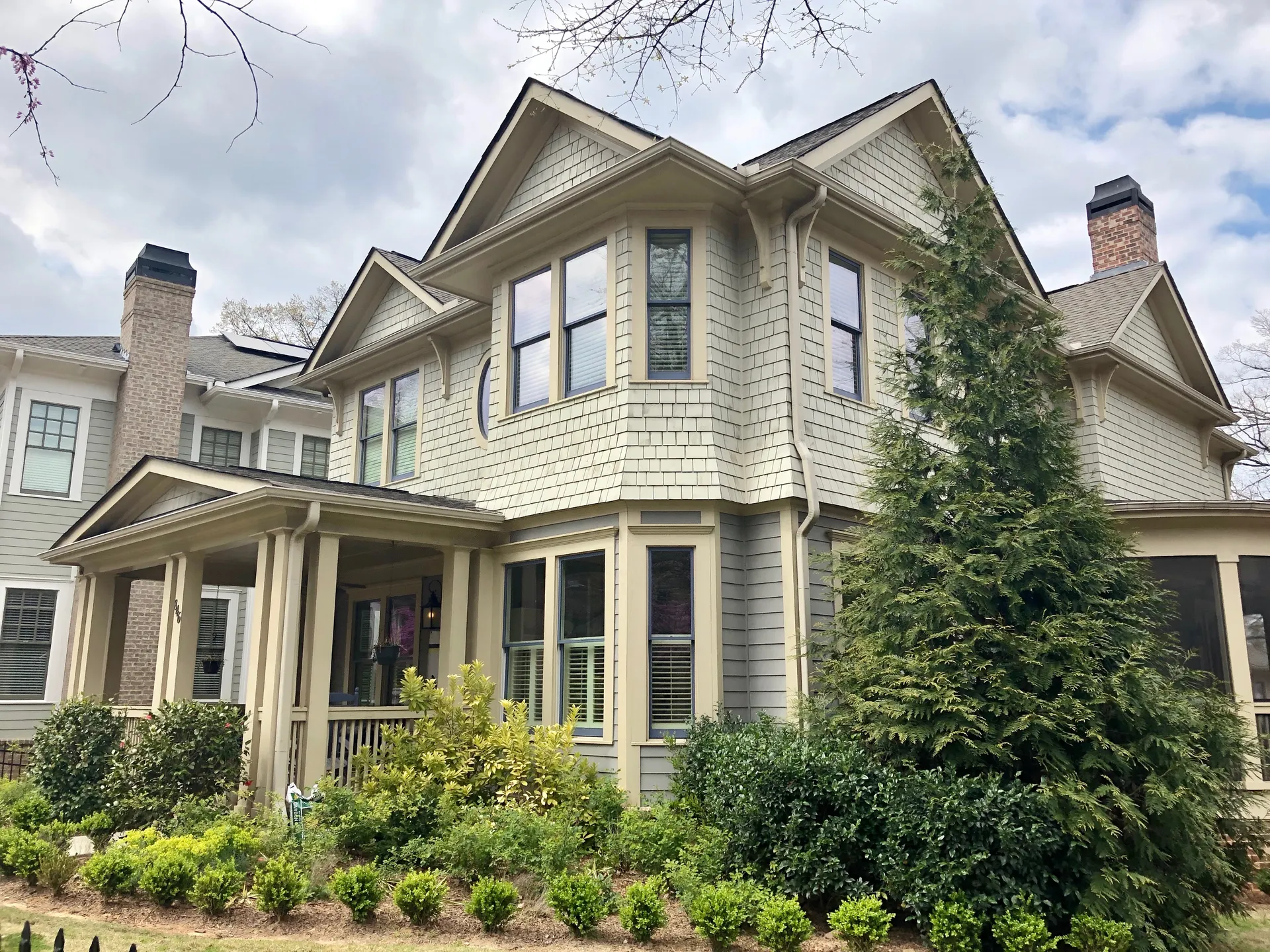
Victorian and Queen Anne homes (1889-1910): These are the signature Inman Park houses: two and three stories, wraparound porches, turrets, stained glass, original millwork. Restored examples with 2,500 to 4,000 square feet list from $1.2M to well over $2M. A handful of the grandest homes on Euclid Avenue and Elizabeth Street have sold above $3M. If you find one that needs restoration work (rare these days), expect $800K-$1M for the house and a significant renovation budget on top.

Craftsman bungalows and cottages (1910-1940): Smaller homes on the neighborhood’s side streets. These run 1,200 to 1,800 square feet with two or three bedrooms. Updated versions list between $550K and $800K. They’re the “entry point” to Inman Park single-family ownership, though entry point is relative.

Modern infill and condos: Townhomes and condo developments have filled in former commercial and industrial parcels, especially near the SE Beltline Eastside Trail. Condos start around $350K-$500K for one- and two-bedroom units. New construction townhomes run $600K-$900K. These appeal to buyers who want the location without maintaining a century-old house.

The competitive reality: Homes in Inman Park typically sell within one to two weeks, often with multiple offers. Bidding $20K-$50K over asking is common on well-priced properties. If you’re buying here, get pre-approved, work with an agent who knows the neighborhood, and be ready to move fast.

The SE Beltline Eastside Trail: Daily Life, Not Just a Talking Point

The Atlanta Beltline Eastside Trail runs along the western edge of Inman Park, and it fundamentally shapes daily life here. This isn’t a park path you visit on weekends. It’s a commute route, an errand corridor, and a social space that residents use constantly.

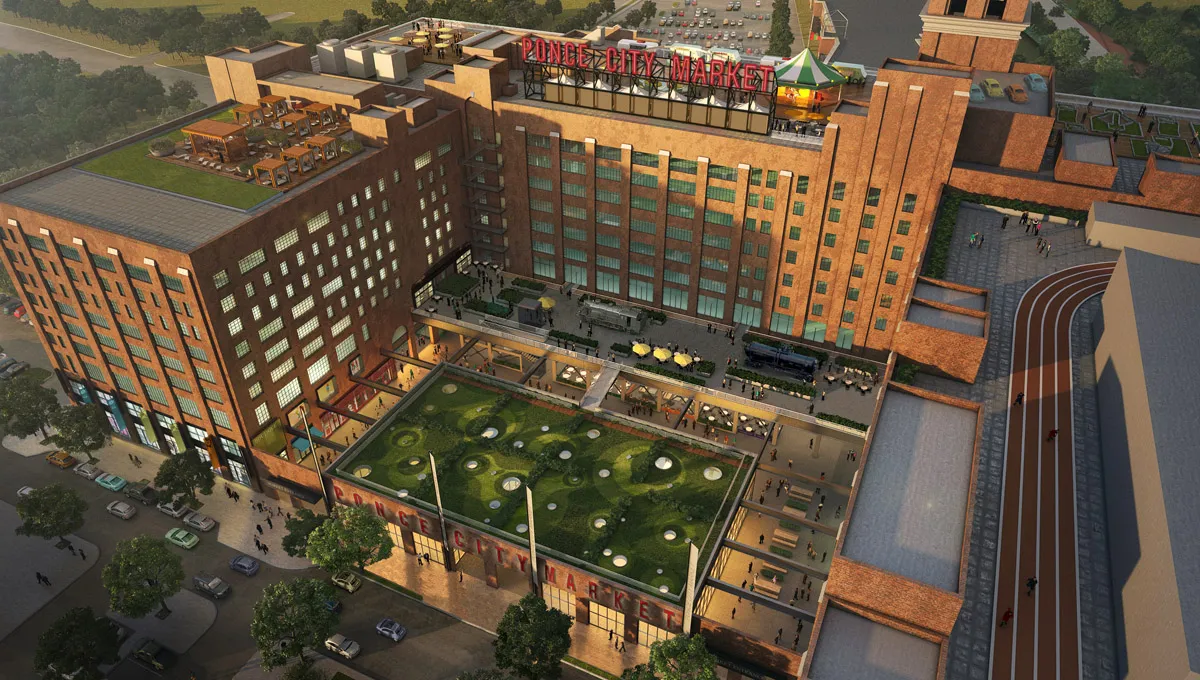
Head north on the trail and you reach Ponce City Market in about 15 minutes on foot, passing through Old Fourth Ward. Head south and you hit Krog Street Market in minutes. On any given evening, the trail is full of runners, cyclists, dog walkers, and people heading to dinner.

Krog Street Market deserves specific mention. It’s technically on the Cabbagetown-Inman Park border and houses a rotating collection of food vendors, a butcher, a seafood counter, and specialty shops. It’s walkable from most of Inman Park and functions as a neighborhood market as much as a destination.

Restaurants and Bars You’ll Actually Use

Inman Park has genuine dining depth, not just a couple of spots.

Barcelona Wine Bar on North Highland does excellent Spanish small plates and has a patio that fills up on warm evenings. Beetlecat serves seafood in a retro diner space. Victory Sandwich Bar is the no-frills lunch and beer spot. Wrecking Bar Brewpub occupies a converted Victorian and brews solid beer with a full dinner menu. Two Urban Licks does Southern-meets-live-music near the SE Beltline Eastside Trail.

For coffee, Dancing Goats at Krog Street Market and Proof Bakeshop on Inman Park Village cover mornings. Grocery needs are handled by the Kroger on Moreland Avenue and specialty shopping at Krog Street Market.

The restaurant and bar density means you can eat out regularly without driving, a genuine rarity in Atlanta.

Transit, Walking, and the 87 Walk Score

The numbers tell the story. An 87 Walk Score, 81 Bike Score, and 59 Transit Score make Inman Park one of the most car-optional neighborhoods in Atlanta.

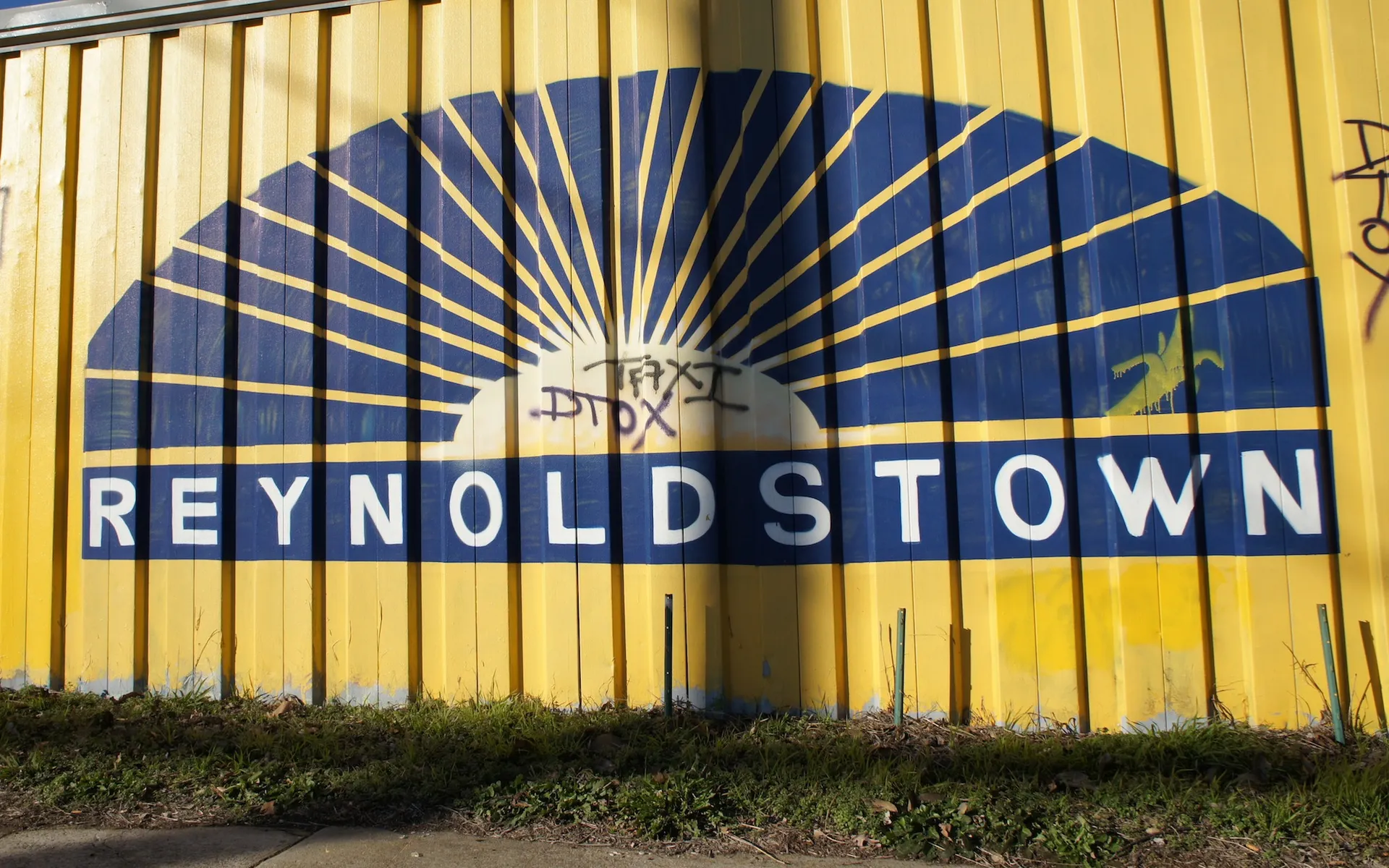
The Inman Park-Reynoldstown MARTA station is at the neighborhood’s southern edge. From there: downtown in about 8 minutes, Midtown in 12, Hartsfield-Jackson airport in roughly 20 minutes. For a city where most people assume they need a car, having reliable train access to the airport is a meaningful quality-of-life feature.

Walking covers most daily needs. Groceries, restaurants, coffee, the SE Beltline Eastside Trail, all reachable on foot from the center of the neighborhood. The streets themselves are pleasant to walk: tree-lined, well-maintained sidewalks, low speed traffic.

Cycling is excellent. The Atlanta Beltline Eastside Trail is a protected path that connects you to destinations across the eastside without mixing with car traffic. Neighborhood streets are flat to gently rolling, and drivers are accustomed to sharing the road with bikes. Many residents keep a car but use it primarily for trips outside the neighborhood.

By car, you’re about 10 minutes from downtown, 12 from Midtown, 8 from Decatur, and 20-25 from the airport. Moreland Avenue and DeKalb Avenue are the main arterials. Rush-hour traffic on these corridors is real, but the MARTA option means you can avoid it.

Schools Serving Inman Park

Inman Park is zoned for Mary Lin Elementary (one of the most popular APS elementary schools with strong test scores and active parent involvement), Inman Middle School, and Grady High School. Mary Lin in particular draws families to the neighborhood. It’s walkable from much of Inman Park and has a reputation that holds up under scrutiny.

Atlanta Neighborhood Charter School and The Friends School of Atlanta are nearby alternatives. The Paideia School, a well-regarded independent school, is in the adjacent Druid Hills area. Families moving to Inman Park with school-age children generally have strong options without long commutes.

The Inman Park Festival and Community Life

The annual Inman Park Festival, held each spring, is one of Atlanta’s longest-running neighborhood events: a weekend of live music, a parade, an art market, a home tour, and a “Tour of Porches” where bands play on residents’ porches. It draws tens of thousands of visitors and gives you a concentrated look at the neighborhood’s personality: proud of its history, a little eccentric, genuinely communal.

Beyond the festival, the neighborhood association meets monthly and deals with everything from historic preservation review to development proposals to park maintenance. Springvale Park and Freedom Park (which connects to the Carter Center trail) provide green space. The neighborhood email list is active and occasionally heated. People care about what happens here.

What You Trade for the Premium

Price: There’s no getting around it. At $850K median and $418 per square foot, Inman Park is expensive by any Atlanta standard. Starter condos are the most accessible entry point, but even those start above $350K for a one-bedroom.

Parking on weekends: The SE Beltline Eastside Trail and Krog Street Market draw visitors, and parking on nearby streets gets tight on weekends and warm evenings. If your house is on a street near a trail access point, expect non-residents parking in front of your house.

Festival weekend: The Inman Park Festival is great, but if you live on the parade route, your street is closed for a weekend. Most residents consider this a feature, not a bug, but plan accordingly.

Construction and development pressure: The Atlanta Beltline Eastside Trail’s success brings development proposals: apartment buildings, mixed-use projects, and commercial expansions. The neighborhood association reviews these actively, but the built environment is not static.

Older home maintenance: A 130-year-old Victorian requires ongoing upkeep that goes beyond normal homeownership. Foundation work, roof repairs, historic-appropriate windows, plaster restoration. Budget for these if you’re buying a period home.

Where to Look by Priority

Walkability to everything: The blocks around Euclid Avenue and the Inman Park Village commercial node put you within a few minutes of restaurants, MARTA, and the SE Beltline Eastside Trail. This is the highest-priced area but also the most functional for car-free living.

Quieter residential streets: Elizabeth Street, Waverly Way, and the streets east of Hurt Street have grand homes, heavy tree canopy, and a more residential feel. You’ll walk a bit farther to the trail and restaurants, but the streetscape is exceptional.

Relative value: The southern edge of Inman Park, closer to Reynoldstown and the MARTA station, tends to price slightly lower than the core around Euclid. You’re still walkable to most things but with a few extra minutes added.

Condos and townhomes: The developments along the SE Beltline Eastside Trail corridor and near Krog Street Market offer the lowest price points. Trail-adjacent units sell at a premium for the access, but it’s still the most affordable way into the Inman Park zip code.


Data sources: Redfin, Walk Score, Orchard. Prices reflect 2025 market conditions.

Quick Facts

Median Price
$850,000
Avg $/Sq Ft
$418
Walk Score
87
Transit Score
59
Bike Score
81
ZIP Codes
30307, 30312
Beltline
Direct Access

Why Live in Inman Park

  • Founded in 1889, Atlanta's original planned suburb
  • 87 Walk Score means you can actually ditch the car
  • SE Beltline Eastside Trail connects to Krog Street Market and Ponce City Market
  • Inman Park-Reynoldstown MARTA station for airport and downtown runs
  • Victorians, Craftsmans, and modern infill, $500K to $2M+

Local Amenities

Food & Drink

  • Krog Street Market
  • Barcelona Wine Bar
  • Beetlecat
  • Victory Sandwich Bar

Parks & Recreation

  • Freedom Park
  • Atlanta Beltline Eastside Trail
  • Springvale Park

Transit

  • Inman Park-Reynoldstown MARTA Station
  • Beltline Eastside Trail

Inman Park FAQs

Clients in Inman Park

5 · 24 reviews on Google
"Deep knowledge of the Atlanta market, especially Boulevard Heights, Chosewood Park, Ormewood Park, and Reynoldstown. Generated serious interest before the property even hit the market."
— David Darko-Mensah
"Not a part-time Realtor. She hit the ground running, told me what I needed to do, and we had it under contract in 40 days."
— Bill Powell
"The exact person we were looking for when it came to the neighborhood and the type of home we wanted. Helped us from beginning to end."
— Fox Wade

Interested in Inman Park?

Get insider knowledge and exclusive listings from a local expert who knows every street.

Contact Bobbie
Call Contact