Boulevard Heights
Grant Park's quieter, more affordable neighbor
Why Boulevard Heights Flies Under the Radar
Boulevard Heights doesn’t try to be the cool part of town. That’s its appeal. While Grant Park and Ormewood Park get the magazine write-ups and the Instagram foot traffic, Boulevard Heights sits one neighborhood south, doing its own thing: quiet streets, actual yards, and home prices that let you keep money in your pocket instead of handing it all to a mortgage.
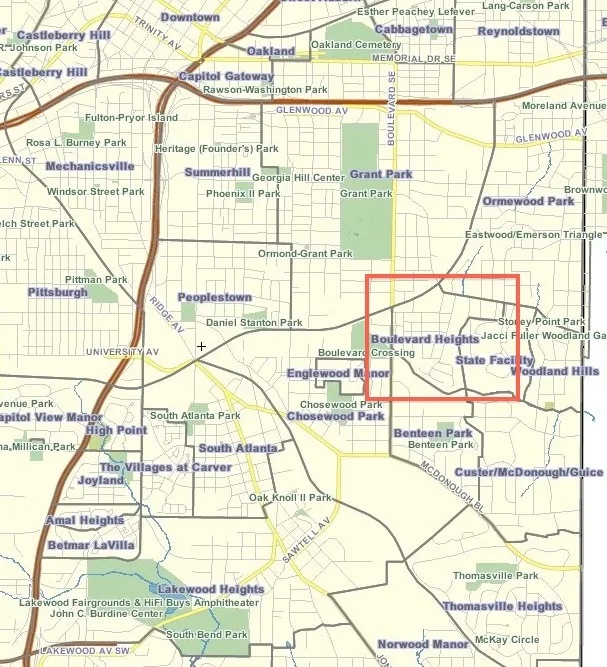
The neighborhood sits roughly between Boulevard SE to the west, Ormewood Park to the north, and the rail corridors that define the southern border. It’s compact. You can walk the whole thing in 20 minutes. And that’s kind of the point. There’s no commercial strip, no restaurant row, no scene. It’s houses, trees, and Boulevard Crossing Park. People who move here are choosing that on purpose.
A Quick History
Boulevard Heights was developed in the early 1900s as a working-class residential neighborhood, part of the wave of streetcar suburbs that grew up south of downtown Atlanta. The original homes were modest: small bungalows and shotgun-style houses built for laborers and tradespeople. The street grid was laid out simply, with a focus on maximizing lots rather than creating grand boulevards.
For decades it was a stable, working-class community. Like many southside neighborhoods, it experienced disinvestment through the mid-to-late 1900s as Atlanta’s growth pushed north and east. But the bones were always good. The lots are a decent size, the streets are walkable, and the proximity to Grant Park means you’re never far from real amenities.
The turnaround started slowly in the 2010s, accelerated when the SE Beltline Southside Trail buildout began reaching Boulevard Crossing Park, and picked up again as Grant Park and Ormewood Park prices pushed first-time buyers to look one neighborhood further out. Today it’s a mix of longtime residents, young families, and investors who bought renovation projects.
The Houses: What You’re Looking At
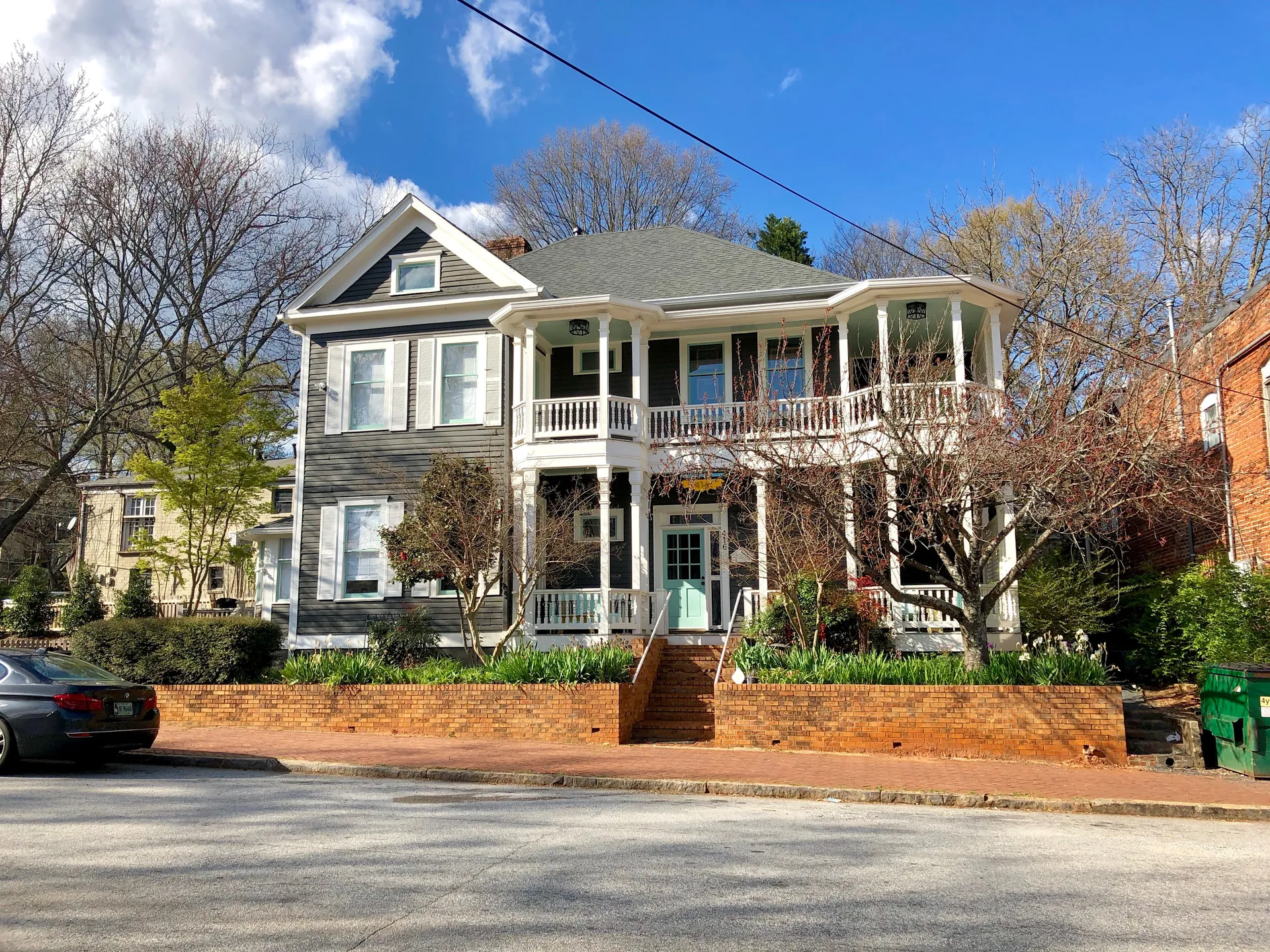
Bungalows from the 1920s-1940s make up the core of the housing stock. These are small, typically 900-1,200 square feet, with two or three bedrooms, one bathroom, front porches, and hardwood floors under the carpet. An unrenovated version has original single-pane windows, an outdated kitchen, possibly some foundation issues, and a lot of potential. Lots are 5,000-8,000 square feet, which means actual front and back yards.
Ranch homes from the 1950s-1960s fill in the rest. A little larger (1,000-1,400 square feet), typically brick, with carports instead of garages. These are the ones that look plain from the street but have solid bones and easy renovation paths: open up the kitchen wall, update the bathrooms, refinish the floors, and you’ve got a solid home.
Renovated homes are increasingly common. Investors and owner-occupiers have been buying and updating houses here for the past 5-7 years. A good renovation adds a primary suite, opens the kitchen to the living space, and updates all the systems. Some add second stories or rear additions, pushing square footage to 1,600-1,800.
New construction is limited but happening. Infill builds on vacant or teardown lots, usually 3-bed/2.5-bath townhome-style or small single-family homes. These are typically priced at the top of the neighborhood market, $475K-$550K.
Breaking Down the Prices
Under $300K: An unrenovated bungalow or ranch that needs real work: new kitchen, bathrooms, HVAC, possibly a roof. These are the buy-and-renovate specials. If you have $80K-$120K in renovation budget and a trustworthy contractor, you come out ahead. This is how first-time buyers get into intown Atlanta.
$300K-$425K: The sweet spot. Partially or fully renovated bungalows and ranches with updated kitchen and baths, good mechanicals, maybe not magazine-perfect but completely livable. Most Boulevard Heights sales happen in this range. You get a real house with a yard, not a condo.
$425K-$550K: Top of market. Fully renovated homes with additions, new construction, or particularly well-located properties near Boulevard Crossing Park. At this price, you’re paying for move-in-ready finishes and extra square footage.
For context: the same renovated bungalow that costs $375K here would run $500K+ in Grant Park and $550K+ in Ormewood Park. You’re paying for the same intown location minus the walkable restaurants.
Schools and Families
Boulevard Heights falls within the Atlanta Public Schools system. Zoned elementary schools include Parkside Elementary and, depending on the specific address, Benteen Elementary. For middle school, most students attend King Middle School. The high school zone is Maynard Jackson High School.
A number of families in the neighborhood opt for charter schools, especially Drew Charter (in East Lake) and KIPP schools are common choices. There’s also a network of private and religious schools within a 10-15 minute drive.
The family presence in Boulevard Heights is growing. The parks, the yards, the quiet streets: it all works for kids. You’ll see more strollers and bicycles every year.
Getting to Work and Getting Around
Let’s be straight about it: you need a car here. The walk score of 48 reflects the reality. There’s no corner store, no coffee shop, no dry cleaner within walking distance. You drive to things.
But the drives are short. Grant Park’s commercial strip on Memorial Drive is 5 minutes. East Atlanta Village is 5-7 minutes. Downtown is 10-12 minutes on Boulevard SE or I-20. Midtown is 15-20 minutes depending on traffic.
MARTA bus routes run along Boulevard SE and connect to the King Memorial station on the Blue/Green line. It’s not the fastest commute, but it works if your job is on the rail line.
The SE Beltline Southside Trail is the real transit story here. Boulevard Crossing Park connects directly to the trail, which means you can walk or bike south toward Chosewood Park and Pittsburgh, or north toward Grant Park. As the Southside Trail buildout continues, the bike connectivity gets meaningfully better each year. A number of residents already bike-commute to downtown using a combination of the trail and neighborhood streets.
Boulevard Crossing Park: The Anchor
This park matters. Seventeen acres of green space with a playground, walking loops, open fields, and direct Southside Trail access. It’s where the neighborhood actually comes together: Saturday morning soccer games, dog walkers doing laps, families spreading out on the grass.
The park also functions as the neighborhood’s connection to the broader SE Beltline system. When the Southside Trail is fully complete, Boulevard Crossing Park will be a major trailhead connecting southside neighborhoods to the rest of the 22-mile loop. That connectivity is already partly built and expanding.
What’s Changing
The SE Beltline Southside Trail buildout is the biggest driver of change. Each phase of construction brings paved multi-use paths, lighting, landscaping, and new access points. For Boulevard Heights, this means the neighborhood gets more connected every year, first to Chosewood Park and Pittsburgh, eventually to the Westside Trail and the full loop.
Infill construction continues on vacant lots. You’ll see a handful of new builds going up in any given year, nothing like the construction frenzy in Reynoldstown or Summerhill, but a steady trickle that fills in gaps and raises the neighborhood’s overall condition.
Grant Park’s continued price appreciation pushes more buyers south into Boulevard Heights. That demand supports rising values here, but the pace is gradual. This isn’t a neighborhood that’s going to double overnight. It’s a slow burn.
The Honest Tradeoffs
You will drive to everything. Groceries, restaurants, coffee: it all requires a car. If walkability to dining is a priority, this is the wrong neighborhood. If you’re fine with a 5-minute drive to Grant Park or East Atlanta Village for dinner, it won’t bother you.
Limited nightlife and retail. There’s no commercial district in Boulevard Heights. The nearest bars and restaurants are in adjacent neighborhoods. Some people love the residential-only feel; others find it isolating.
Some streets need attention. Sidewalks are inconsistent. Some blocks have them, some don’t. Street lighting is adequate but not great on every block. These are city infrastructure issues that improve slowly.
Construction noise from nearby SE Beltline Southside Trail work is periodic. It’s not constant, but when an active phase is underway near Boulevard Crossing Park, you’ll hear it.
Perception gap. Some people still think of the southside as “not ready.” Boulevard Heights doesn’t have the name recognition of Grant Park or Ormewood Park, which can be a frustration when you’re trying to explain where you live. On the other hand, that perception gap is exactly why the prices are still reasonable.
Where to Focus Your Search
Streets near Boulevard Crossing Park: the closer you are to the park and Southside Trail access, the stronger your long-term value. Look along Berne Street SE and the cross streets that border the park.
The blocks between Boulevard SE and Ormewood Avenue: this section feels the most established, with more renovated homes and better tree canopy. It’s also the closest to Grant Park if you want to walk or bike to restaurants.
South of Confederate Avenue SE (renamed as the city processes street renamings): larger lots, lower prices, more renovation-ready homes. This is where the real deals are if you’re willing to take on a project.
The bottom line: Boulevard Heights is for buyers who want a real house with a yard in intown Atlanta and are willing to trade walkable restaurants for a mortgage payment that doesn’t make them sick. If you got priced out of Grant Park or Ormewood Park, this is where to look next.
Data sources: Zillow, Redfin, Walk Score. Prices reflect 2025 market conditions and are subject to change.
Quick Facts
- Median Price
- $385,000
- Avg $/Sq Ft
- $275
- Walk Score
- 48
- Transit Score
- 36
- Bike Score
- 62
- ZIP Codes
- 30312, 30316
- Beltline
- Direct Access
Why Live in Boulevard Heights
- SE Beltline Southside Trail access via Boulevard Crossing Park
- Median home price around $385K, well below Grant Park and Ormewood Park
- Boulevard Crossing Park: 17 acres with playgrounds, trails, and open fields
- Minutes to Grant Park restaurants and East Atlanta Village
- Mostly owner-occupied homes on low-traffic residential streets
Local Amenities
Parks & Recreation
- Boulevard Crossing Park
- Atlanta Beltline Southside Trail
Nearby Amenities
- Grant Park restaurants
- East Atlanta Village
Boulevard Heights FAQs
Clients in Boulevard Heights
★ 5 · 24 reviews on Google"Deep knowledge of the Atlanta market, especially Boulevard Heights, Chosewood Park, Ormewood Park, and Reynoldstown. Generated serious interest before the property even hit the market."— David Darko-Mensah
"Knowledgeable about homes in Chosewood Park and Boulevard Heights. Genuinely cares about her clients and wants to see them succeed."— Daniel Wilcox
"Not a part-time Realtor. She hit the ground running, told me what I needed to do, and we had it under contract in 40 days."— Bill Powell
Interested in Boulevard Heights?
Get insider knowledge and exclusive listings from a local expert who knows every street.